
Craft Code Switching II
Comparing and contrasting the structures of knit and crochet fabric


In this second Craft Code Switching post I want to zoom right in on the structure of knit and crochet fabrics and look at how they diverge, what they have in common, and how we can use this knowledge to get the most out of them as hand-knitters and crocheters.
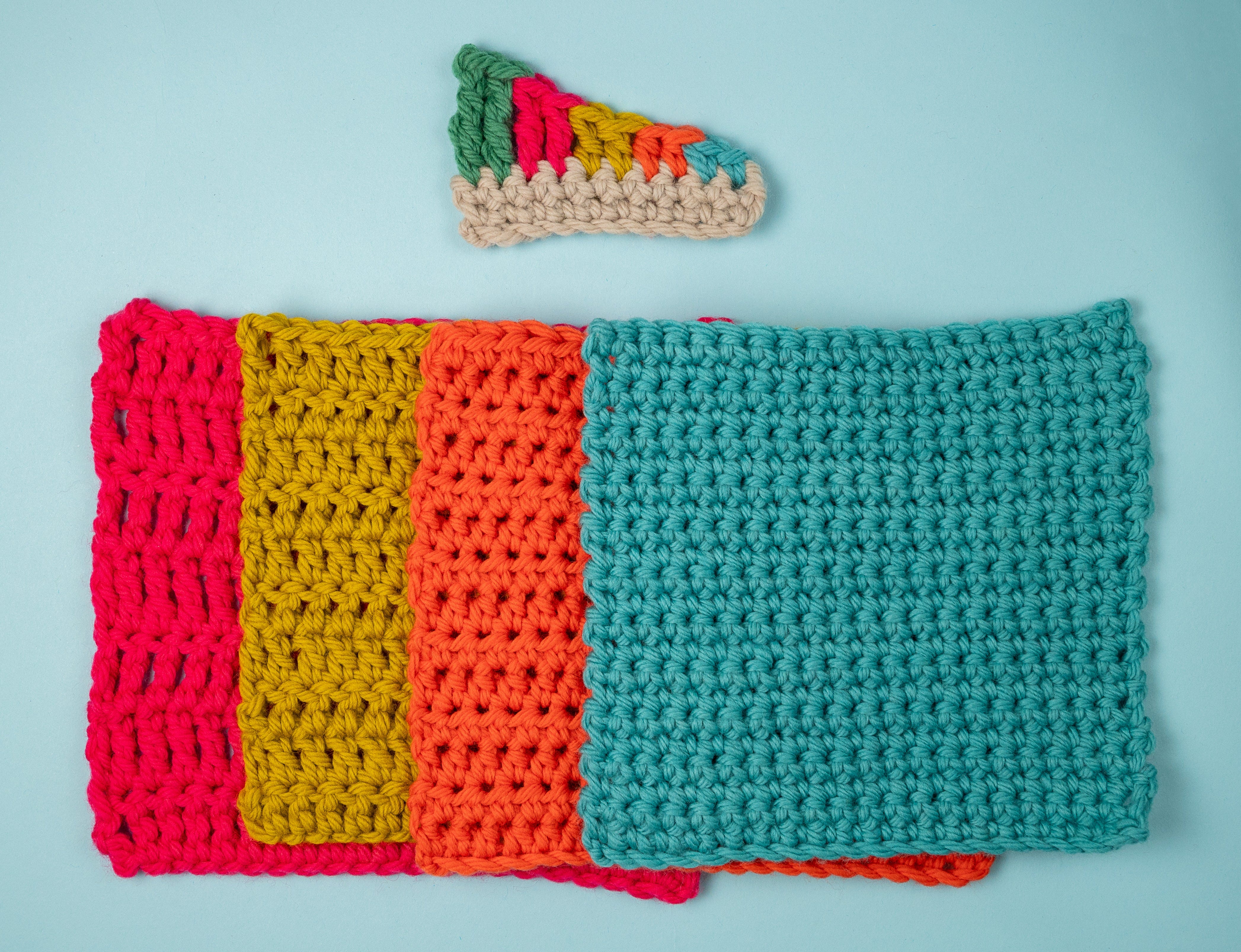
It makes a lot of sense that knitting and crochet are so often mistaken for each other, both are created with small, portable tools and yarn and can be used for a lot of the same things; hats, scarves, jumpers, and blankets to name a few. But like I said in the first part of this series, although they have a similar (to the untrained eye) output, each craft has its own distinct way of getting there. Their purpose is more or less the same but the fabrics they make are very different and if you know how to do both you may well choose one over the other for a particular project. The question I want to consider here is why? What exactly is it about each craft and the fabric it makes that lends itself better to particular things? When you knit or crochet, each individual movement and manipulation of your tools is small, but together they add up, much like your stitches do, to something bigger. Both involve loops; it’s how those loops are made and combined that distinguish them.
When knitting, you use at least two needles to hold your live stitches, working into each in turn. The number of stitches you have has to be held either on your needles or on a holder or scrap yarn. You can work in the round or flat, and as you come to each stitch you use your needle to pull a new loop through.

Of course you might be increasing or decreasing or cabling but, if we are talking absolute basics, knit fabric is just a row of loops pulled through a previous row of loops! And what exactly are those loops? They are knit/purl stitches. Knit and purl stitches are the same stitch just facing different directions (something which I always marvel at), so a knit stitch is a purl stitch on the other side and vice versa. This means that knitting has just two basic stitches - a very compact and binary-esque system! One of the loveliest and most useful things about knit fabric is its innate stretch and drape, which is why it’s so often used for fabrics that need memory or need to be close-fitting. Lastly, knitting machines exist. This might seem like an odd statement, but not all fabrics (spoiler alert) can be replicated by a machine.
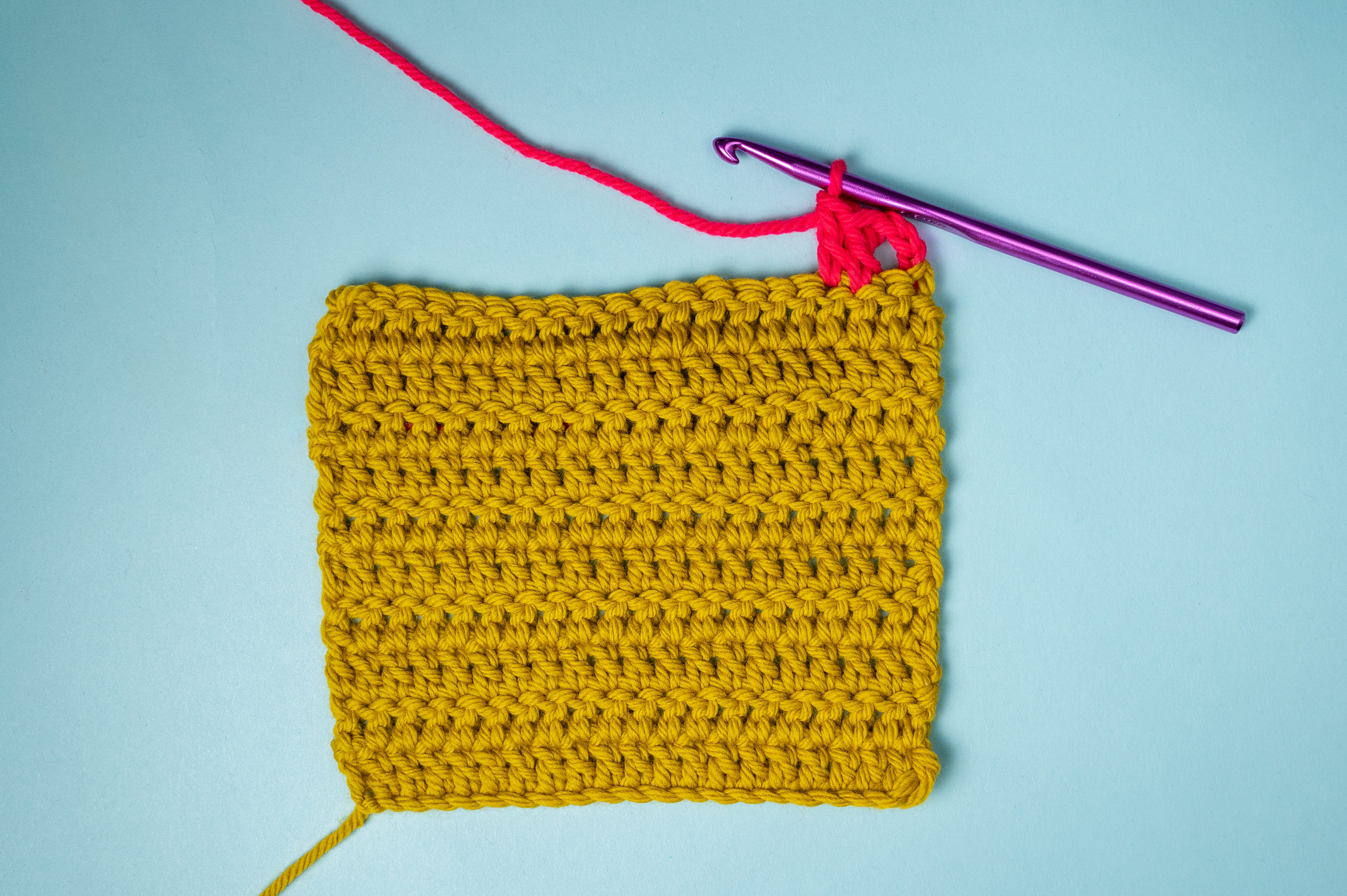
So on to crochet, a fabric that cannot be replicated mechanically! There is no such thing (at the moment) as a crochet machine, which means that when you crochet you are doing something that currently only human hands can do. Which is in itself a lovely thought. Whereas with knitting you use needles to hold live stitches, in traditional crochet there is only ever one live stitch: the one on your hook. This means there is a lot of freedom in where stitches can be placed. When you’re making your crochet stitches, you are still pulling loops through loops, but those loops get piled together on top of each other and become little knot-like stacks. For each different crochet stitch you have a different number of loops in your little stack.
Keep reading with a 7-day free trial
Subscribe to Pom Pom to keep reading this post and get 7 days of free access to the full post archives.