

How to Convert Winter Knitting Pattern to a Summer Pattern
It might be easier than you think ☀️

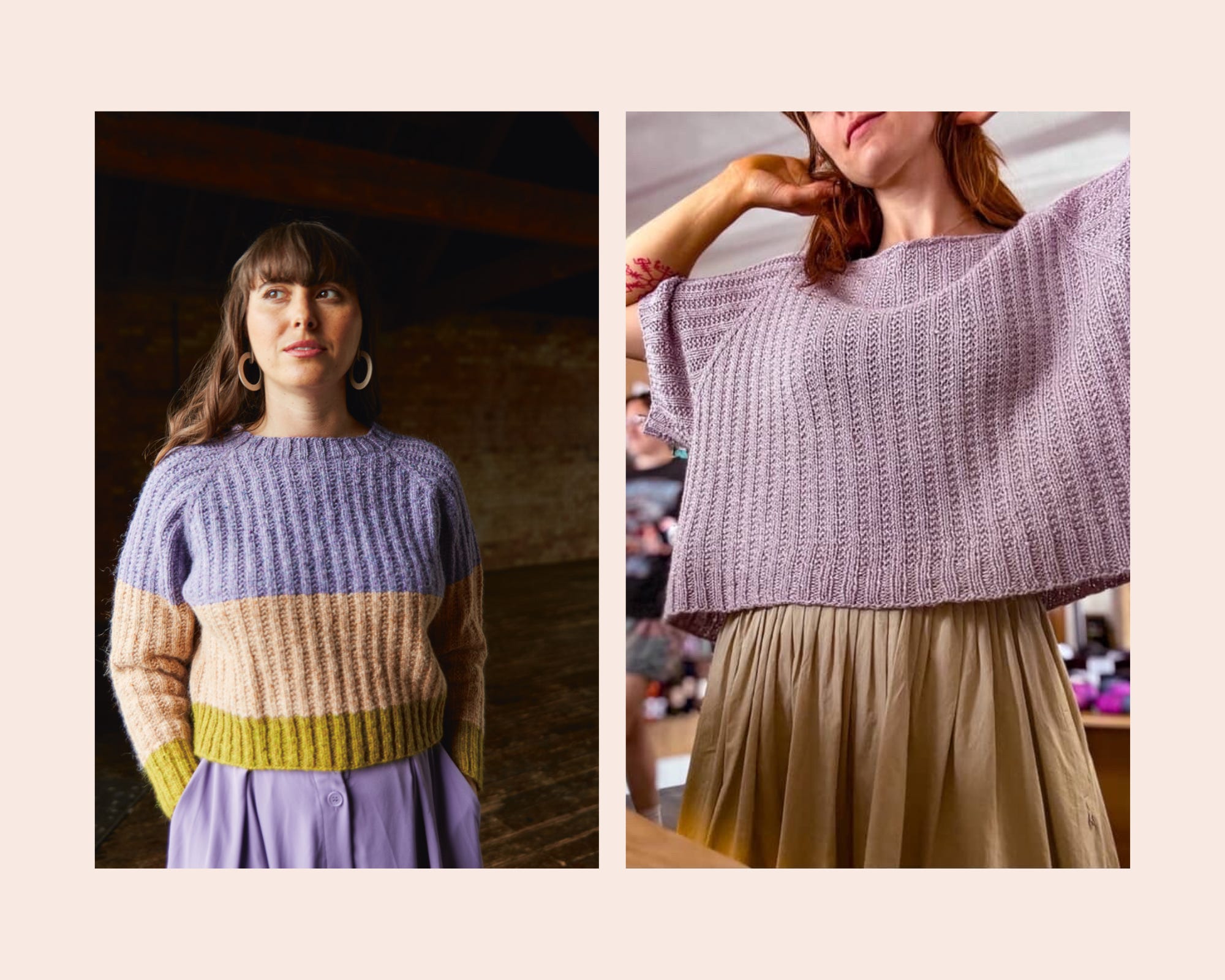
After 12 years of living in near-constant summer conditions in Austin, I got pretty good at figuring out ways to continue to knit pieces for my wardrobe that I could wear in the heat. (See also our many summer issues of Pom Pom where designers really cracked that code too.) I even used to teach a class on the subject, called Warm Weather Knits.
In 2025, I was lucky enough to teach at Camp Knit ATX, a retreat organised by my then-LYS, where we focused on patterns from Ready Set Raglan, and in particular, the Eila pattern from that book.
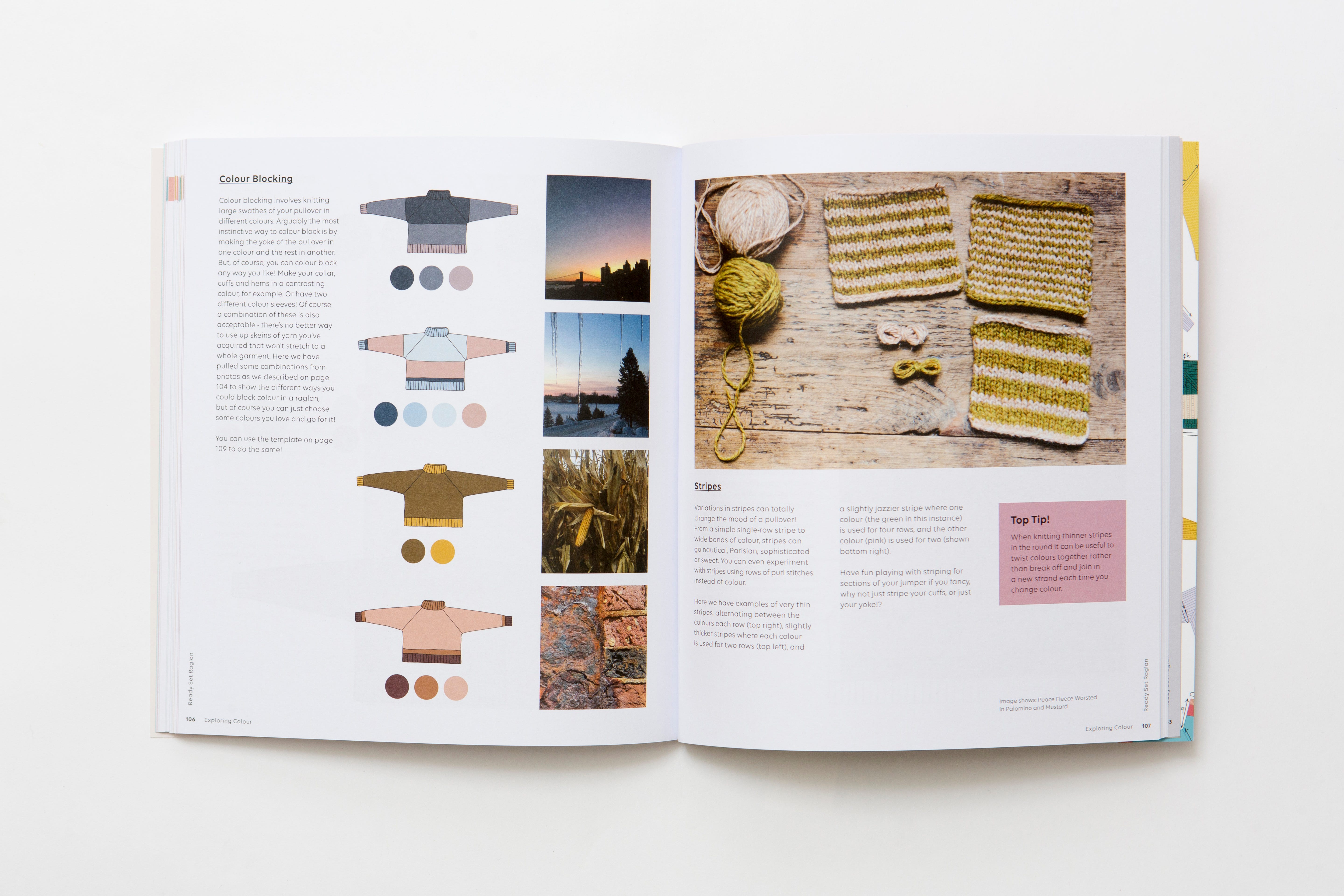
Ready Set Raglan was written as a guide to taking the classic top-down raglan design and customising it to make it your own. The book includes eight distinct patterns to show how different stitch patterns, collars, ribbing, and length options can really open up endless possibilities. Like a choose your own adventure novel, but for knitting patterns.
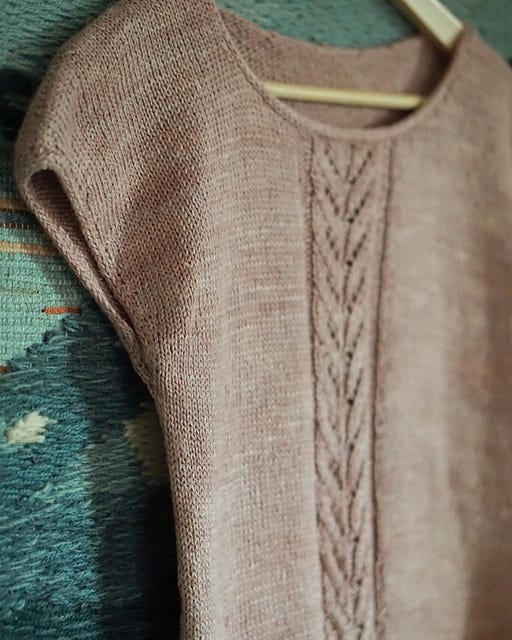
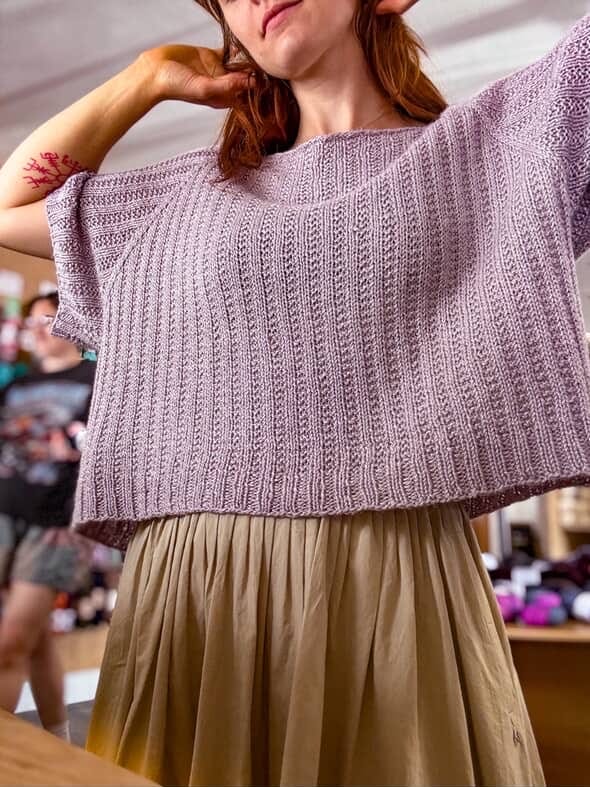
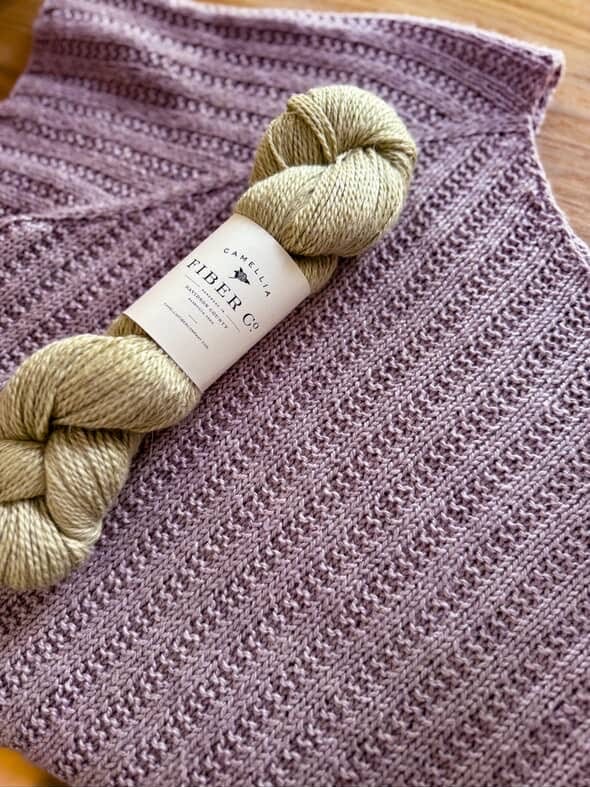
The original pullover pattern calls for worsted merino yarn (the sample shown above is in Peace Fleece Worsted). As the retreat was in late spring in Texas, I couldn’t really fathom having everyone working on woolly pullovers; it was already hot outside and only going to get hotter straight through to October. So I settled on making a warm-weather version of Eila in a more summery yarn, Camellia Fiber Co.’s Flax DK, which is a blend of linen, alpaca, and silk. For a true hot weather version, I might use a completely plant-based yarn instead, but this was perfect for a spring or early autumn top.
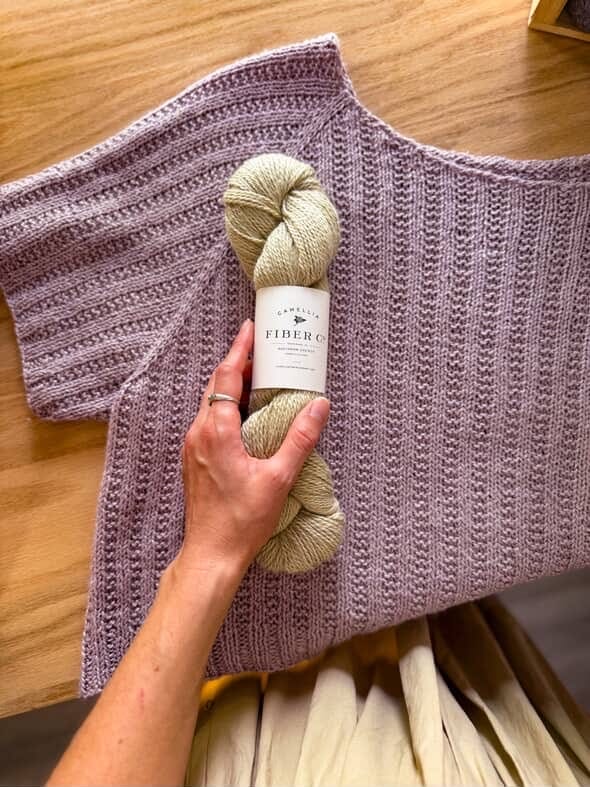
I knew the drape of these fibres would work beautifully for the flowy, airy, oversized iteration I was going for, but there were other considerations too:
The pattern: First and foremost, I could see that this pattern would work for summer with the right adjustments. For example, the stitch pattern would allow for the lighter yarn without being too sheer. I also knew the raglan sleeves in Eila would be easy to adjust because the pattern is knit from the top down. A dropped shoulder could work too by just leaving off the sleeves, and a set in sleeve could also even work if you want a tank top - you might just need to add a small edging.
If you’re looking to make a wintery pattern more summery colourwork is one thing you’ll need to think about. For peak summer heat, I probably wouldn’t choose a worsted colourwork design, because multiple colours and strands of yarn in one row create a double thickness fabric (which of course works great for cold months). However it’s not impossible that a cotton colourwork sweater would work for you depending on how hot your summers get, and how thin the yarn you would be using is. And of course stripes or intarsia would work fine.Yarn Choice & Gauge: The Flax DK was thinner, with less plumpness than the worsted merino from the pattern, meaning that in order to get gauge, my fabric would be much looser than the original. This, luckily, was totally ok with me as I wanted that airiness present. I had used this exact yarn previously at a much tighter gauge, and I had a good feeling about using it more loosely for this top. And on another note, knitting with fibres that don’t have much elasticity can be hard on the hands for some people - the looser gauge helps a lot with that. Of course you’ll want to swatch to make sure you’re happy with the resulting fabric and gauge to be sure you’re happy with how it will turn out.
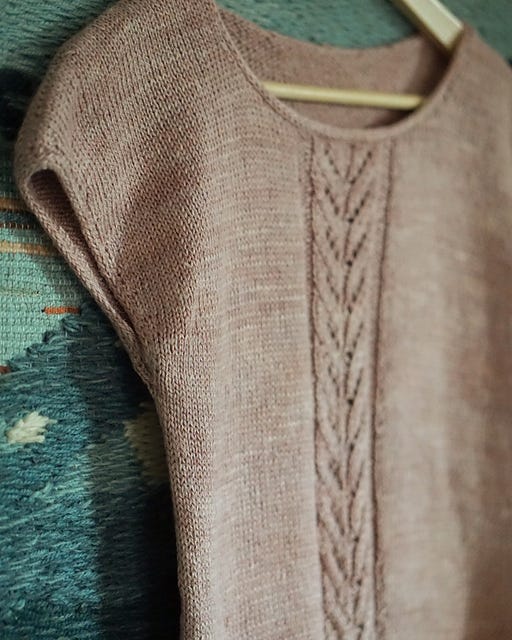
My Catchfly top from 2016 in Camellia Fiber Co. Flax DK


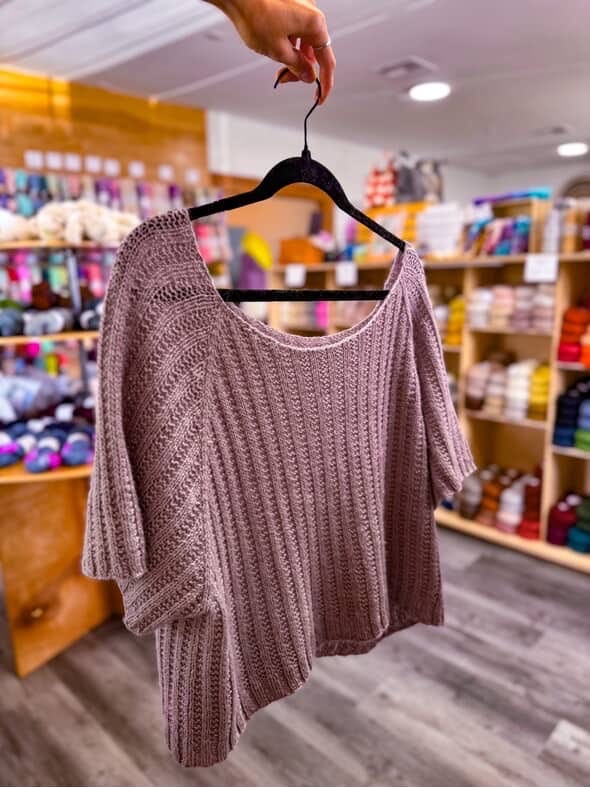
Sizing & Fit: I like most tops a little oversized these days, and especially in summer where close-fitting clothes just feel like they trap hot air and sweat. So for this Eila, I decided I wanted a lot of ease to keep things extra breathable. To achieve this I went up one size from what I would have chosen with the recommended ease. This also allowed for more space at the underarms, and a boxier look.
You’ll want to check that the pattern you’re using allows for the amount of ease you want if you intend to go up a size or two. Your best bet is to measure the chest circumference of a top you like and match that to a size in the pattern.
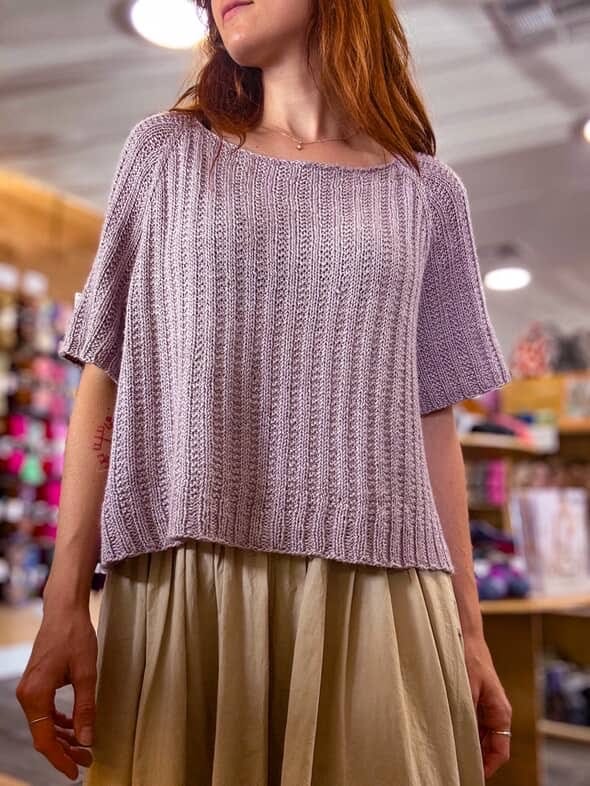
Additional modifications: From the outset, I knew my summery Eila would be short sleeved. Luckily this part was easy! Because the pattern is top down, I just stopped knitting the sleeves at the length I liked, and then did about four rounds in 2x2 rib. I decided not to do the ribbing with smaller needles as you might normally on cuffs as I wanted the sleeves to be pretty straight and loose (same with the hem). I did surprise myself by deciding not to add any kind of neckband. In the pattern, your choice of neckband is added last. In a woolly yarn, the neckline without any kind of collar to hide the cast-on can look a bit messy and unfinished, but with the drape and sheen of the Flax DK, this was not an issue. The neckline was nice and smooth and even. Leaving the collar off also means that the neckline is wider and more open, great for a summery top! If you are concerned about the neckline stretching out over time, you can always do one or two rows in stocking stitch to stabilise it, or single crochet if you know how.
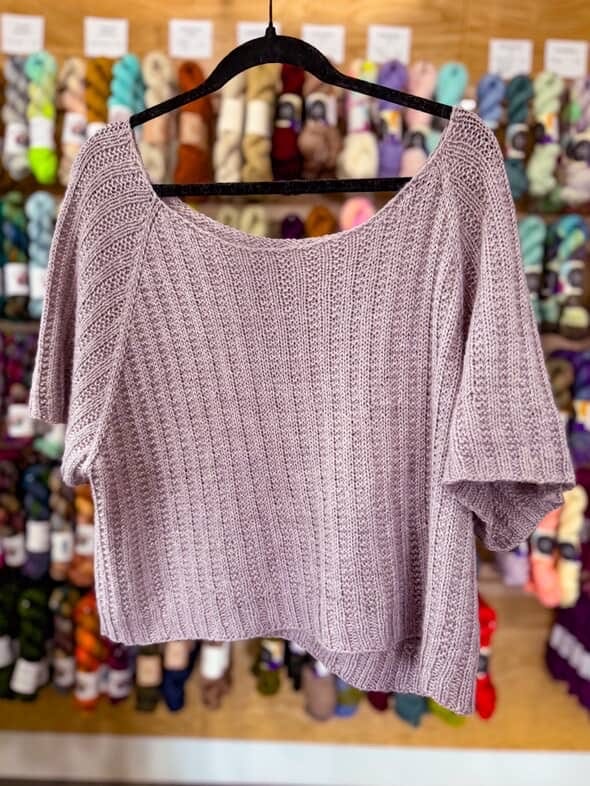
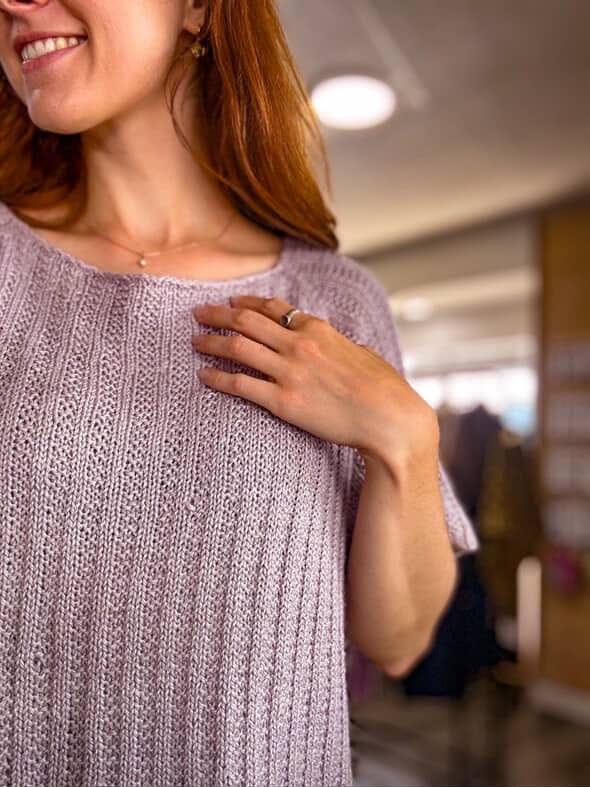
So in summary, when deciding whether and how you want to make a winter garment summer-friendly, just keep to those three main considerations:
whether the pattern is a good candidate for summer-ising
summer friendly yarn
the amount of ease you’ll want
sleeve length and collar options
Are there any patterns you’d consider converting to a summer pattern? Let us know in the comments! We’d be happy to weigh in on how they might work!
Special thanks to Sydney at Knit ATX for the photography and modelling!
I’m considering The Weekender by Andrea Mowry. Could this work if I shorten it and leave off the sleeves? I’m worried that the stockinette will not be breathable. What yarn would you recommend? I’m in Austin and have almost all of your Summer issues!